
Its flu season! Did you know Echinacea and Black Elderberry work as effectively as Tamiflu (Oseltamivir) to shorten the duration and severity of flu symptoms, without the unpleasant side-effects of gastrointestinal upset (increased nausea and vomiting). Who needs THAT when they’re already down with the flu?
About Echinacea
Have you tried Echinacea in the prevention and treatment of colds and flu? Ayurveda helps you to know when and how to use this beautiful herb by learning to understand and recognize the virya or energy of an herb as cooling or heating along with other properties, and how to match them to your symptoms. Echinacea purpurea and Echinacea angustifolia according to 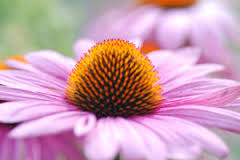 Ayurveda, are balancing to pitta and kapha but will provoke vata – largely due to its cooling nature and bitter flavor. Echinacea has been shown in clinical trials to be ineffective against preventing and treating symptoms of the common cold.(1) What are the symptoms associated with the common cold? Runny nose, sneezing, and congestion, rarely accompanied by fever. In other words, colds are a viral infection that do not involve fever – or the quality of excess pitta, or heat, in the body. From an Ayurvedic perspective, it makes sense why Echinacea has not stood up to the scientific rigors to prove its effectiveness in the presence of a cold virus. Its cooling virya makes it ineffective against the primary doshas at play in the symptoms of the common cold. The doshas responsible for the symptoms of the common cold, vata (cold and dry) and kapha (cold and wet) may not resolve, or may in fact worsen, in the presence of cold virya. This may be why traditional use of echinacea calls for taking it as a hot infusion – to counter its cold virya and thereby improve its effectiveness.
The flu virus, however, differs significantly from the common cold.
Influenza is largely distinguished from the “common cold” by the presence of high fever, a body temperature greater than 101 degrees Fahrenheit and indicates that the viruses responsible for the flu further involve pitta vitiation (excess heat) along with vata and kapha symptoms.
In the presence of the influenza virus, echinacea has been shown to be very effective at diminishing the symptoms and reducing the duration of the flu. In combination with Elderberry, Echinacea has been shown to be as effective as Tamiflu, the direct acting anti-viral, in reducing the severity and duration of flu. (2)
About Elderberry
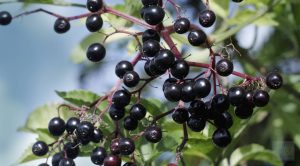
Elderberry sambucus nigra has been shown to be highly effective against influenza, both in vitro and clinically, reducing the duration of the symptoms of influenza by up to four days.(3) Like its friend Echinacea, Elderberry is also cooling in virya but its taste is more complex: sour, sweet, bitter and pungent – lending balance to the tridosha. The sweet flavor balances vata and pitta, the sour flavor balances vata, bitter flavor balances pitta and kapha, and pungency is balancing for vata and kapha.
Simple and elegant, Ayurveda helps sharpen the focus on the lens of scientific inquiry via an understanding of the doshas, the tastes, and the subtle energetics of medicinal substances or dravya.
What does the research say?
In a study conducted in 2015, researchers recruited 473 patients who had exhibited flu symptoms for less than 48 hours from 29 primary care practices in the Czech Republic. The patients were randomly assigned to take Echinaforce® Hotdrink syrup – a beverage containing an alcoholic extract prepared from freshly harvested echinacea (Echinacea purpurea) herb and root (95% herb; 5% root) supplemented with European elderberry (Sambucus nigra), for 10 days, or oseltamivir (Tamiflu) for five days followed by placebo for five days. The results? After 10 days, recovery was equivalent in both groups, with both duration and severity of flu symptoms decreased. However, the elderberry + echinacea group recovered a bit faster while avoiding gastrointestinal side effects experienced by the direct-acting antiviral group. And while the side effects of nausea and vomiting were reported to “rarely” occur in the oseltamivir (Tamiflu) group, follow up research has revealed some contradiction about the effectiveness and post-market reporting of side-effects and rare adverse effects for this pharmaceutical.(4)
- Czech researchers compared the medicinal effect of an echinacea root/herb and elderberry combination against the conventional direct-acting antiviral flu remedy oseltamivir (Tamiflu) in two groups.
- Results showed that after 10 days recovery was similar in both groups, with duration and severity of symptoms decreased.
- Incidence of side-effects was low in both groups – though those taking the Tamiflu were more likely to experience gastrointestinal issues such as nausea and vomiting.
The take away?
If you want to harness the power of nature, and avoid the unpleasant side effect of Tamiflu, try Elderberry with Echinacea.
Look for Elderberry syrup labeled “Immune” or “Immune +” and check the ingredients for both Elderberry (Sambucus nigra L. 1.5 grams juice + extract or 50 mg extract) and Echinacea (Echinacea purpurea flower and Echinacea angustifolia root 50-200 mg), available over-the-counter by Garden of Life and Nature’s Way.
References
- https://sciencebasedmedicine.org/echinacea-for-cold-and-flu/
- Rauš K, Pleschka S, Klein P, Schoop R, Fisher P. Echinaforce Hotdrink versus oseltamivir in influenza: a randomized, double-blind, double dummy, multicenter, non-inferiority clinical trial. Curr Ther Res. 2015; [epub ahead of print]. doi: 10.1016/j.curtheres.2015.04.001.
- Z Zakay-Rones, E Thom, T Wollan, J Wadstein. Randomized Study of the Efficacy and Safety of Oral Elderberry Extract in the Treatment of Influenza A and B Virus Infections. Journal of International Medical Research. 2004 doi: 10.1177/147323000403200205
- Gupta YK, Meenu M, Mohan P. The Tamiflu fiasco and lessons learnt. Indian Journal of Pharmacology. 2015;47(1):11-16. doi:10.4103/0253-7613.150308.
Updated 2026